Attacks disrupt Saudi Arabia’s key oil pipeline
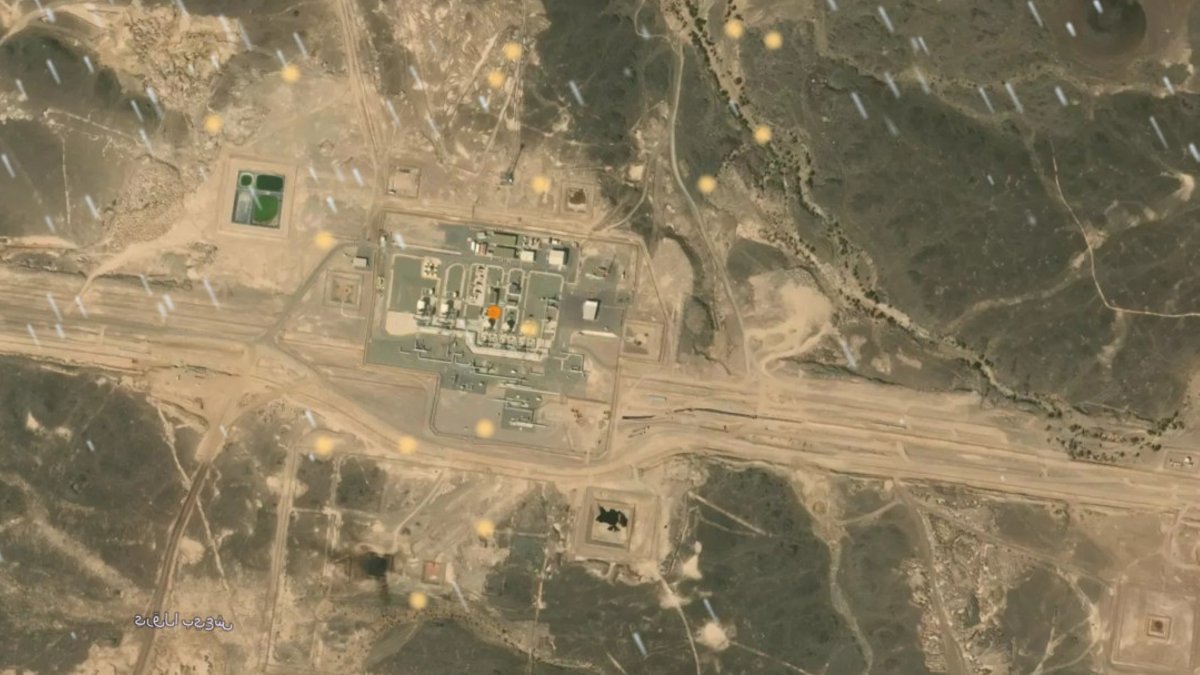
On Thursday, a series of strikes hit the East‑West oil pipeline system in Saudi Arabia, damaging several pumping stations and raising concerns about the kingdom’s main crude export corridor.
Drone‑borne projectiles strike transport facilities
Satellite data released Thursday showed unusual activity along the corridor, with NASA FIRMS reporting multiple large fires near the line. Imagery from the Sentinel‑3 satellite displayed a dense plume of black smoke stretching across the western desert, indicating intense combustion at several points.
NASA’s Fire Information for Resource Management System (FIRMS) flagged the hotspots as large‑scale fires, while Sentinel‑3’s multispectral sensors captured the extensive smoke column, confirming the intensity of the combustion events along the pipeline corridor.
U.S. officials said the attacks involved drones launching from Iraq, although no organization has claimed responsibility. One image captured a burning station close to Al Mesba’ah, while a separate shot showed fire and thick smoke near Al Dhekra. The exact damage to the main conduit remains unconfirmed, and investigators continue to assess structural integrity.
Although no group has stepped forward, Saudi authorities have repeatedly blamed Iran‑backed militias for similar drone strikes launched from Iraqi soil, a pattern that has surfaced in several previous incidents.
Read Also: U.S. diesel hits $6 per gallon
Potential repercussions for oil flow
Saudi officials have not commented publicly, and it is still unclear how long repairs might take. If only the stations are impaired, they could be restored more quickly than a breach in the main conduit, which would have broader implications for supply.
The differentiation between damage to peripheral pumping stations and a breach of the main line is key, because station repairs can be executed in days, whereas a conduit rupture may require weeks of welding and testing.
Analysts note that the route bypasses the Strait of Hormuz, a chokepoint that has faced disruptions in the past. The line carries roughly 5 million barrels per day toward the Red Sea port of Yanbu, out of a total capacity of about 7 million bpd. Any prolonged outage could force a reroute of a substantial volume of crude, putting additional strain on alternative shipping lanes.
Since the U.S.–Iran conflict and Hormuz’s closure, the East‑West pipeline has become one of the world’s most strategically valuable oil arteries, channeling a sizable share of Saudi crude away from vulnerable maritime chokepoints.

U.S. diesel hits $6 per gallon


